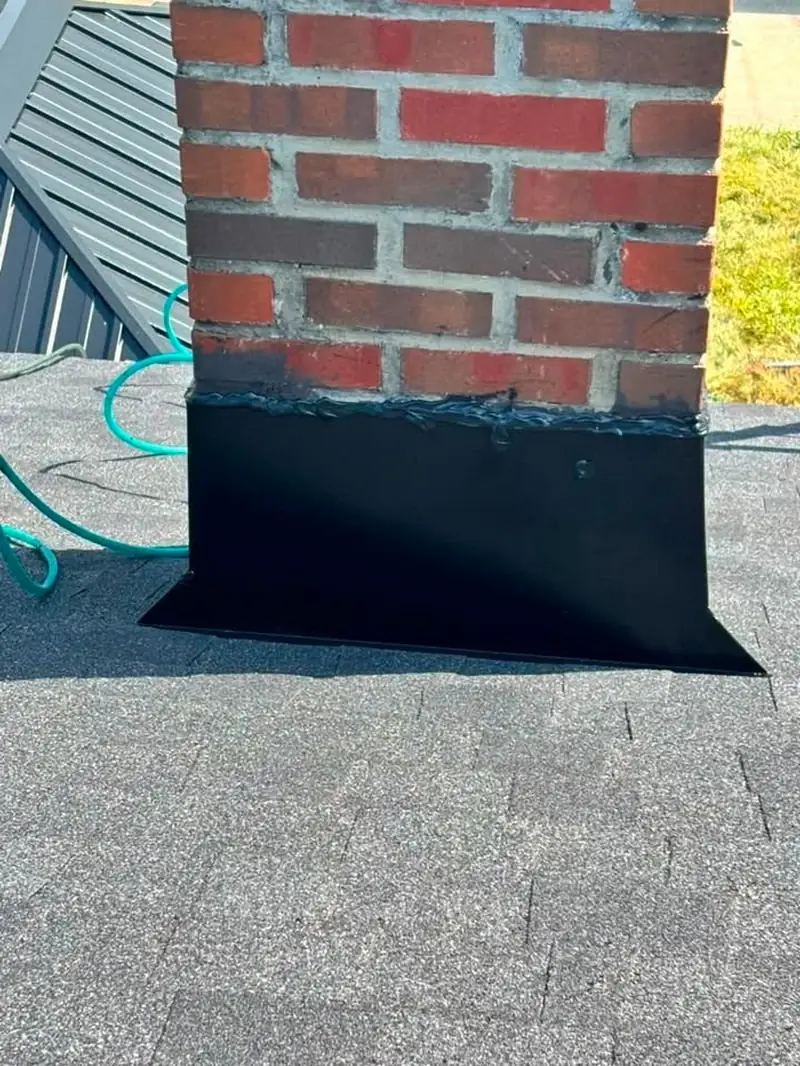
Types of Flashing We Repair
- Step flashing — individual metal pieces that integrate with shingles or tile along wall-to-roof transitions, typically at dormers and additions
- Counter flashing — the upper portion of a chimney or wall flashing system that overlaps step flashing and is embedded in masonry
- Chimney flashing — the full assembly around a chimney base, including step, counter, and saddle (cricket) flashing at the upslope side
- Skylight flashing — the frame and pan flashing around skylights that directs water around the curb and onto the roof below
- Valley flashing — metal or membrane at roof valleys where two slopes meet and water concentrates
- Pipe boot and vent flashing — collars around plumbing vents, exhaust stacks, and other penetrations
- Drip edge and eave flashing — metal at the roof edges that directs water into gutters and away from fascia
Chimney Flashing — A Common Problem Area
Chimney flashing failures are among the most frequent sources of interior water damage on Livermore, CA-area homes. Chimneys are isolated masonry structures that expand and contract independently from the roof framing around them. This differential movement gradually works the counterflashing free from the masonry mortar joints and allows water to enter behind the flashing system.
A properly executed chimney flashing repair involves correctly embedding the counterflashing in the mortar joints, installing or replacing the step flashing at the sides, and addressing the back of the chimney — where a saddle or cricket is required on wider chimneys to divert water that would otherwise pond against the masonry.
Skylight Flashing
Skylights are convenient and attractive, but they are complex penetrations that introduce multiple flashing junctions into the roof field. A leaking skylight may be failing at the head, at one of the side flashings, at the sill, or at the skylight curb itself. Not every skylight leak requires a new skylight — in many cases, the existing skylight is sound and the flashing assembly around it needs to be reworked or replaced.
Caulk is not a flashing system: One of the most common quick fixes applied to failing flashing is filling gaps with caulk or sealant. This approach is temporary at best — sealant applied over failed flashing rarely lasts more than a season before cracking again. Proper flashing repair involves correctly installed metal that functions mechanically, not just sealant that covers a gap.
Roof Flashing Repair & Replacement Cost Breakdown (Livermore, CA)
*Estimated flashing repair costs reflect local Livermore, CA contractor averages based on metal material gauge, chimney height, and tile/shingle removal requirements.
Frequently Asked Questions — Flashing Repair
Related Services
Get a Flashing Repair Estimate
If you have a leak near a chimney, skylight, dormer, or wall, flashing is the most likely cause. Call or message us to schedule an on-site assessment.