When sudden active leaks or storm damage compromise your home across Ruby Hill, South Livermore, Robertson Park, or Holmes Street, fast intervention prevents extensive interior ceiling and drywall damage.
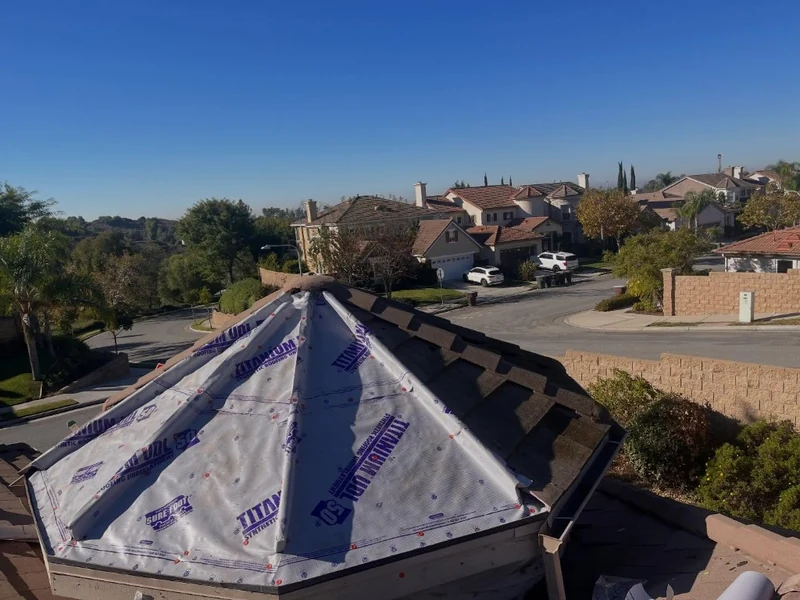
Our team of reliable Livermore CA roofing contractors dispatches quickly to perform immediate damage containment, high-temperature synthetic underlayment installation, and secure emergency tarping over exposed decks.
We handle urgent tree limb punctures, severe wind-blown tile displacement, and flash flooding around chimney transitions. Our team works closely with property owners to provide clear photo documentation for insurance claim filing following storm damage roof assessments.
Safety first: If you notice sagging ceilings, standing water near electrical equipment, or structural movement, evacuate the affected area and contact emergency services before calling a roofer. Do not attempt to climb onto a damaged roof yourself.
Common Emergency Roof Scenarios
Wind-lifted or missing shingles exposing underlayment or decking to rain
Displaced or broken tile sections allowing direct water entry
Tree limb or debris impact creating open penetrations in the roof surface
Failed or pulled-away flashing at chimneys, skylights, or wall transitions
Active interior water entry during or immediately following rain events
Atmospheric-river events that stress older roofing materials to failure
What We Do in an Emergency Situation
1
Damage Assessment
We evaluate the roof condition and access safety before recommending or beginning any work. Photographs are taken to document the damage area and extent.
2
Temporary Weatherproofing
Where safe access is possible, temporary protective measures — including properly secured tarping and foam sealant over open areas — can limit further interior damage while permanent repair is planned.
3
Permanent Repair Planning
Once the immediate threat is addressed, we scope the permanent repair and schedule it based on material availability, weather windows, and your timeline.
Temporary Weatherproofing — What It Is and What It Isn't
Temporary protection measures are designed to reduce additional damage while a permanent repair is arranged — not to serve as a long-term solution. A secured tarp over an open section, for example, can prevent further rain entry for days or weeks, but it is not a substitute for proper repair. The underlying damage continues until permanent materials are installed.
Temporary measures are not always suitable. Roof pitch, debris load, wind exposure, and structural condition all affect whether temporary protection is feasible and effective. We explain clearly what is possible and what is not for your specific situation.
Full shingle replacement, underlayment renewal, or permanent valley metal flashing
Site Suitability
Applied when roof pitch and structural integrity permit safe crew access during weather windows
Feasible on severely compromised decks or during active lightning / high-risk storm conditions
Insurance Documentation
If your damage may be covered by homeowners insurance, photograph everything before any temporary measures are taken. Document the interior damage, the exterior damage, and any debris or evidence of the cause. We can provide written documentation of our findings and the work performed, which you may submit to your insurer. We cannot predict or guarantee whether a claim will be approved or paid.
*Estimated emergency repair costs reflect local Livermore, CA contractor averages based on damage accessibility, pitch, and time of call.
Frequently Asked Questions — Emergency Roofing
We prioritize urgent situations and work to respond as quickly as scheduling and safety conditions allow. Response time depends on current workload, weather conditions, and access feasibility. We cannot guarantee same-day arrival in all circumstances, but we communicate clearly about timing once we understand your situation.
In most cases, yes — particularly if the damage is localized and water entry is limited to a specific area. Avoid rooms directly beneath visible sagging, standing water, or areas where structural integrity is in question. If you have any doubt about safety, err on the side of caution and relocate until the situation is assessed.
Active rain limits what we can safely do on a roof. We can often document interior conditions, assess from the ground, and sometimes perform targeted temporary measures with appropriate safety precautions. We will not send crew onto a wet or structurally compromised roof surface when conditions make it unsafe to do so.
A properly secured tarp can protect an area for days to several weeks depending on wind, sun exposure, and how it is anchored. It is not a solution for extended periods. Permanent repair should be scheduled as soon as materials and weather allow.